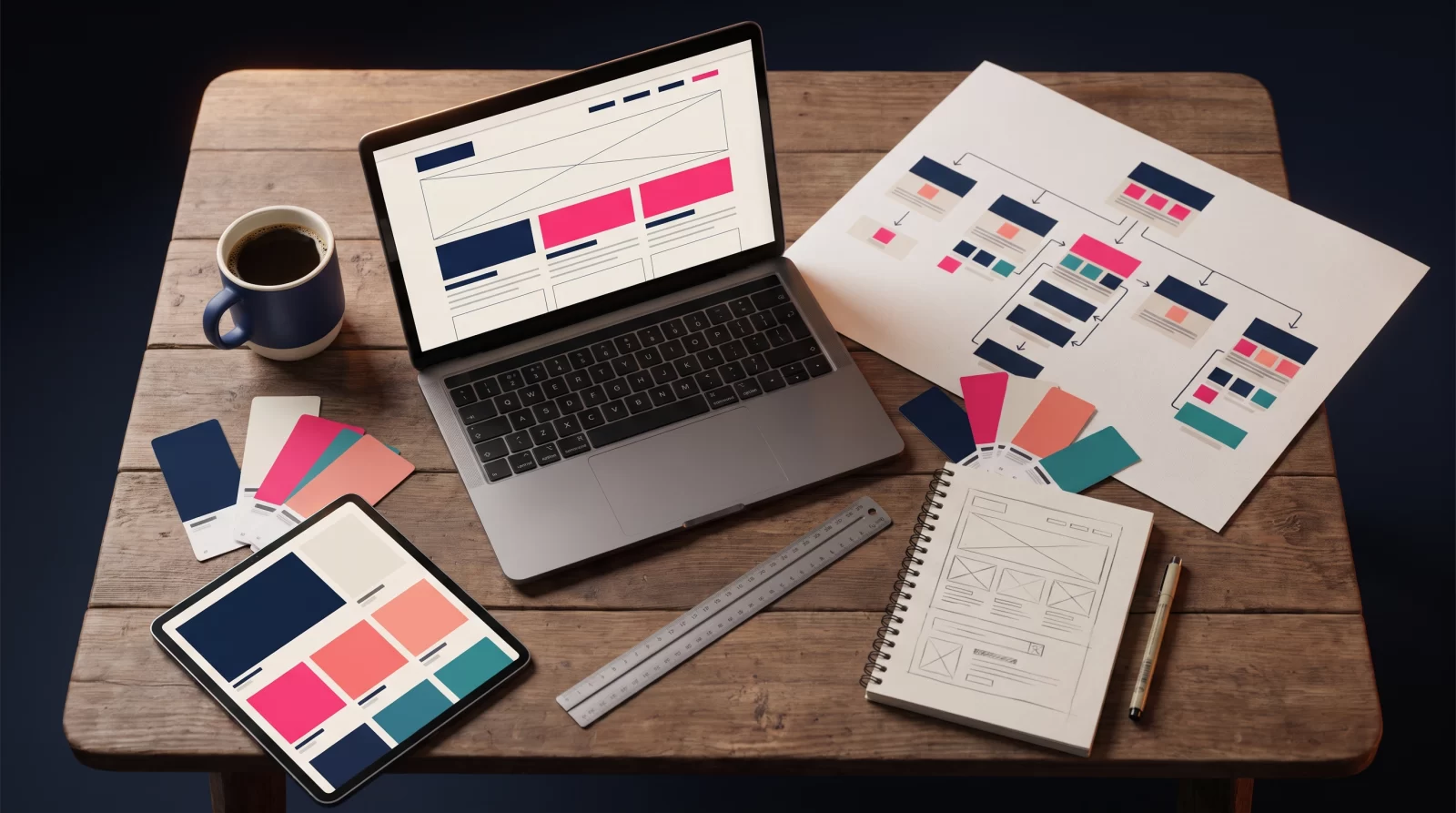

What Do Web Design and Coding Do?
The short answer to what web design and coding do is this: one produces visual and functional decisions, while the other makes these decisions work in the browser. Design carries user needs, brand language, and content hierarchy onto the screen. Coding turns this layout into a structure that runs with HTML, CSS, and JavaScript; it makes technical decisions on issues such as speed, accessibility, and security.
The role of design: understanding the user and the brand
The design process begins with user research, competitor analysis, and information architecture. Questions such as which content will sit on which page, where the main button will be placed, and what will appear on mobile are answered at this stage. Good design is not decoration but direction: it leads the user to the information they are looking for without unnecessary steps.
The role of coding: turning design into a working product
On the coding side, the page structure is built; forms, menus, animations, and interactions come into play. Coding also directly affects SEO: heading hierarchy, page speed, image dimensions, and mobile compatibility are determined here. That is why design and coding are not two disconnected jobs but two layers of the same product.
The Relationship Between Web Design and Coding: Why Are the Two Disciplines Inseparable?
When there is a disconnect between design and coding, two types of problems arise: embellishments that exist in design but have no counterpart in code, and situations that are possible in code but were never considered in design. The empty list view, error message, very long heading, or very short content are examples of these. That is why the relationship between web design and coding should be established at the start of the project.
Design decisions shape code, technical limits shape design
A scroll animation can create a performance cost on mobile; a multi-layered shadow leaves behind code that is difficult to maintain. When the designer makes decisions knowing these limits, the number of revisions decreases and development time becomes predictable.
Common language: design system and component library
Color, typography, spacing, and button styles are defined from a single source; on the code side, these values are used as variables. Thus new pages are not designed from scratch but produced from existing components. As the team grows, consistency is maintained in this way as well.
Where does front-end design come into play?
Front-end is the area where design comes to life in the browser. Different screen widths, keyboard navigation, form validation, and loading states are handled here. Good front-end work meets technical requirements without breaking the design and offers the user a consistent experience.
Web Project Process: What Are the Steps from Idea to Launch?
The web project process does not proceed by opening a single file but through sequential steps that feed one another. Skipping steps leads to expensive corrections later on both the design and coding sides. The following flow can be applied to small and large projects by changing scale.
Discovery and content planning
The target audience, competitors, and business goals become clear. The page list, content needs, and technical requirements are put in writing. Decisions made at this stage become the reference for all subsequent steps.
Design and prototype
The skeleton is built with wireframes, and then the visual design is prepared. Menu and form flows are tested early through a clickable prototype; thus feedback is received before coding begins.
Development, testing, and launch
When the design is approved, coding begins; the content management system, forms, and integrations are put into operation.
Coding and integration
Pages are coded as components, the admin panel is connected, and measurement tools and forms are set up.
Testing and launch control
Browser and device tests, speed measurement, accessibility, and SEO checks are performed; then a post-launch monitoring plan is put into action.
How Is Quality Control Done in Design and Coding?
Quality is not a decision made at the end of the project but a habit maintained throughout the process. When measurable checks are performed on both the design and coding sides, the site launches with fewer problems. The following list can be used for a quick round of checks before delivery.
Pre-launch checklist
- Have page speed and image dimensions been tested on a mobile connection?
- Have the heading hierarchy and page meta information been checked?
- Do forms, error messages, and empty states work as designed?
- Are keyboard navigation and color contrast sufficient?
- Have measurement tools been set up and conversion goals defined?
Why does receiving service from a single team make the process easier?
When design and coding are carried out by separate teams, brief loss, revision delays, and uncertainty of responsibility can arise. At CSA Medya, we carry out web design, coding, and SEO work within the same process; thus design decisions and technical requirements are discussed at the same table. You can contact us to evaluate together which stage your project is at and to create a roadmap.
Key takeaways
Bring design and code together in one brief
When design and development teams move forward with the same goals and user scenarios, revisions drop noticeably. At the start, gather the page list, content needs and technical requirements in a single document. This document should be a shared reference for both designer and developer, so no one proceeds on assumptions.
Set up the design system at the start of the project
Defining colour, typography, spacing and button styles early ensures consistency on later pages. Use these values as variables in code; new sections should be built from existing components rather than designed from scratch. This approach both speeds up production and prevents the visual language from fragmenting as the team grows.
Don't leave mobile and speed tests until the end
Before design is approved, test pages on mobile screens and on slow connections. Large images, heavy animations and unnecessary plugins are the most common performance issues. These early tests make it possible to make technical fixes before launch without disrupting the design.
Prepare your post-launch measurement plan
Launching the site does not mean the work is done; you need to track which page attracts visitors and which form is completed. Define measurement tools, target conversions and key report headings before launch. Regular tracking lets you base design and coding decisions on data rather than guesswork.
Frequently asked questions
Can web design and coding be done by the same person?
For small and medium-sized projects, yes, it is possible. However, as scope grows, having design decisions and technical implementation handled by separate specialists improves quality. What matters is that both sides speak a common language through the same brief and design system.
Can web design be done without knowing how to code?
Visual design and prototyping can be carried out without coding knowledge. Still, basic HTML and CSS knowledge helps designers anticipate which decisions will create technical cost. This awareness reduces the number of revisions and communication issues between teams.
What is the difference between front-end design and graphic design?
Graphic design establishes the visual language and brand aesthetics; front-end determines how this language behaves in the browser. Screen widths, button states, keyboard navigation, and loading moments are the subject of front-end work. When the two work together, users get a consistent and usable experience.
How long does a web project take to complete?
Timeline varies depending on the number of pages, content readiness, integration needs, and number of revision rounds. Single-page promotional sites and multilingual e-commerce projects do not follow the same schedule. For a realistic plan, the scope must be put in writing during discovery.
Should a ready-made theme or custom coding be preferred?
Ready-made themes are fast and low-cost; however, they remain limited for unique functionality and advanced SEO needs. Custom coding offers flexibility and performance advantages, but requires more planning. The choice should be made according to the brand's growth goals.