
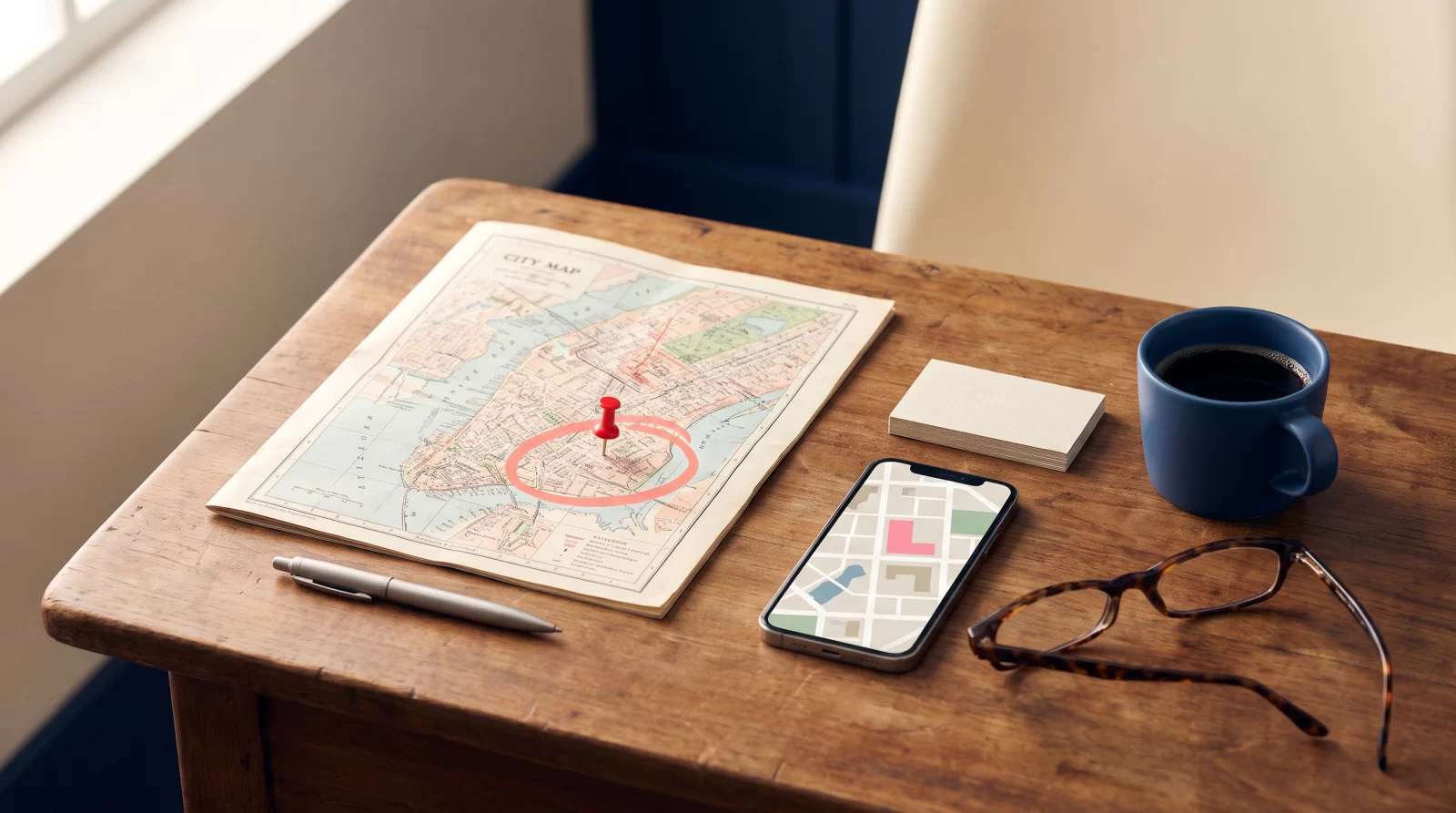
The Core Logic of Location Targeting in a Local Ad Campaign
For a local business, the biggest waste in an advertising budget comes from clicks from areas it does not serve. Google Ads location targeting lets you show your ad only to users within a specific city, district, neighborhood or radius. This setting is the foundation of a local ad campaign, because the goal is not to collect clicks but to win the customer who walks through the door or answers the phone.
Why does location targeting change local customer acquisition?
An untargeted campaign pays for clicks from all over the country. Yet for a hairdresser, auto repair shop or café, the purchase decision largely depends on distance. When location targeting is in place, three things improve together: conversion rate rises, cost per click becomes more predictable, and the budget is actually directed to the area you serve. For brands doing regional marketing, this is the single variable that determines the channel’s profitability.
Who, where, and how far away?
Before starting planning, answer three questions in writing: who buys which service, in which neighborhoods this person is concentrated, and what distance is acceptable to you? These answers together determine campaign structure, ad copy and bidding strategy. A structure built before the answers are clear becomes both expensive and time-consuming to correct later.
Three common planning mistakes
- Putting every city in one campaign: Cost and demand dynamics differ across regions; separate campaigns produce clearer data.
- Setting the radius too wide: A wide area increases impressions but lowers conversion rate.
- Forgetting excluded locations: When districts you do not serve are not explicitly excluded, the budget quietly erodes.
Defining the Target Area and Radius Correctly
The most critical decision in location targeting is where to draw the boundary. Too narrow an area limits potential, while too wide an area dilutes the budget. The right approach is to consider the business’s actual capacity and the distance the customer can tolerate together.
Map out your service area
First, mark your business’s location on a map. Then draw the three to five areas your customers most often come from, using past sales or phone records if available. This drawing quickly shows the difference between intuitive guesswork and real data. For a newly opened business, doing the same exercise with travel time is more realistic.
Use radius and region options together
Google Ads lets you target both specific regions (city, district, postcode) and a radius around a specific point. Covering a dense core area with a radius and the surrounding broad but sparse area at district level creates a balanced structure. Instead of mixing these two methods in one campaign, separating them into different campaigns makes performance easier to measure.
Step-by-step location targeting setup
1. Clarify your service area
Define in writing the distance within which a customer can call or visit. This becomes the reference for all subsequent settings.
2. Choose the targeting type
In campaign settings, the “people living in, located there, or regularly visiting there” option captures not only current physical location but also genuine interest. It generally delivers more efficient results for local businesses.
3. Mark excluded locations
Exclude districts you do not serve, your warehouses, or areas with intense competition; check them at regular intervals.
Structuring Location Settings Together with Bids and Budget
Location targeting alone is not enough; it gains meaning when it works together with bid and budget settings. Distributing the same budget equally across all districts often means paying the most in the most expensive area.
Location-based bid adjustments
Percentage increases can be applied to areas that produce conversions and percentage decreases to weak areas. However, this setting should be made after the campaign has collected enough data; estimated adjustments made in the first days disrupt learning. The second benefit of region-based adjustment is that it lets you see which neighborhood is genuinely profitable.
What to look at when allocating budget across regions
Allocate budget based on three signals: the region’s search volume, average conversion rate and customer lifetime value. For example, a neighborhood with a high average basket value can support a more expensive click. If this table is missing from the regional marketing plan, budget continues to be distributed by intuition and results fluctuate.
Seasonality and daily movement
Local demand is not static. Season in tourist areas, term starts in university neighborhoods and weekday density in business centers make a clear difference. Adjusting your ad schedule together with regional breakdown ensures more local customer acquisition with the same budget. Reviewing these adjustments once a month is sufficient; constant intervention resets the learning period.
Ad Copy, Landing Page Experience and Local Signals
Even if location targeting is set up correctly, clicks will not turn into conversions if the ad copy and landing page do not speak to the region. The user should quickly understand that the ad they see speaks to their own neighborhood.
Add local traces to ad copy
Using the region name in the headline creates a direct connection between search intent and the copy. Mentioning the neighborhood, district or a well-known nearby landmark builds trust. Adding local decision drivers such as service distance, delivery time or parking to the copy also improves click quality. Concrete details should be preferred over overly generic statements.
Landing page experience must be consistent with location
Writing “Ataşehir” in the ad and having no local information on the landing page undermines trust. The page should include the address, opening hours, map, transport notes and services specific to that area. Mobile speed and one-touch calling are decisive details in local customer acquisition. Creating region-based landing pages positively affects both ad and search performance.
Google Business Profile and local reputation
Advertising delivers the best results when it works together with the map and reviews side. Keep your business profile’s address, category and opening hours up to date; respond regularly to incoming reviews. When the experience promised in the ad conflicts with the information in the profile, the user hesitates. Managing these three layers together frees regional marketing work from dependence on a single channel.
Measurement, Testing and Sustainable Optimization
To understand whether location targeting is working, you need a measurement setup broken down by region. Total cost and number of conversions alone are misleading; the real question is which region brings customers at what cost.
Reading the location report correctly
Open location and distance breakdowns in campaign reports. Evaluate regions together with cost per conversion and conversion rate; looking only at click count is misleading. If conversion tracking has not been set up, complete this step first, because all location decisions depend on this data. It is also useful to define local actions such as phone calls and direction clicks as conversions.
Which tests to run and when?
- Radius test: Compare the same campaign with two different radii using split campaigns, not one campaign.
- Bid test: Measure a bid increase in one region while keeping other regions constant.
- Message test: Run ad copy with and without the region name side by side.
Each test needs to run uninterrupted for at least several weeks; early intervention makes results unreliable.
Making results permanent
Turn your findings into a written procedure: which region will run in which campaign, at which bid range and with which message? This record ensures the strategy is preserved even if the team changes. Reviewing the service area and customer distribution quarterly ensures that targeting is updated as the business grows. If you want to build your local ad campaign within this framework, you can contact the CSA Medya team to plan one suited to your own region.
Key takeaways
Define your service area in writing first
Before touching location targeting settings, clarify the distance the customer can tolerate to reach you. Mark your business and the few neighborhoods where your customers are concentrated on a map. This drawing becomes the reference for radius and region choices and prevents later guessed corrections.
Manage radius and region targeting in separate campaigns
Use a radius for the dense core area and district or postcode targeting for the surrounding broad area. Separate them instead of mixing both in the same campaign; this way you clearly see which method performs better. Apply region-based bid adjustments after enough data has accumulated.
Make your ad copy and landing page speak to the region
Including the neighborhood or district name in the ad headline connects search intent with the copy. The landing page should include address, opening hours, map and transport information; the page must not conflict with the promise in the ad. Mobile speed and one-touch calling are details that directly affect local conversion.
Do not make decisions without region-level measurement
Total cost and number of conversions alone do not provide direction. In the location report, evaluate each region together with cost per conversion and conversion rate; define local actions such as phone calls and direction clicks as conversions too. Keep tests running uninterrupted for several weeks and turn the results into a written procedure.
Frequently asked questions
What is the difference between Google Ads location targeting and location exclusion?
Location targeting determines which regions’ users your ad will be shown to. Location exclusion explicitly removes places outside this area from the list; for example, you can exclude neighboring districts you do not serve or your warehouse addresses. When used together, the budget flows only to the audience you actually address and impression waste decreases.
What should the ideal targeting radius be in kilometers for a local business?
There is no single correct value; distance varies by type of business. For a café or hairdresser, a few kilometers may be enough, while for services such as auto repair or appliance repair a wider area may make sense. The decisive question is: does the customer find this distance tolerable? Your past customer records and search volume data offer a more reliable starting point than trial and error.
How does location targeting affect cost per click?
As targeting narrows, the intensity of competition and demand changes; this directly affects cost. Click costs may rise in dense centers and may be lower in surrounding areas. But what matters most is cost per conversion; a cheap click that does not convert is expensive. Each area should be evaluated within its own cost and conversion balance using region-level reports.
When should targeting by interest rather than physical location be preferred?
Targeting based on the user’s current physical location stands out for urgent services that require proximity. In contrast, the option covering people who regularly visit or live in the area reaches a wider audience for planned purchases. For example, in services with a long decision process such as renovation or education, interest-based targeting generally delivers more efficient results.
When should I apply region-based bid adjustments?
It is right to apply them after the campaign has collected enough conversion data. Estimated adjustments made in the first days disrupt the learning period and make results unreliable. When conversion rate or cost per conversion differs clearly between regions, it makes sense to define increases for strong regions and decreases for weak ones. Make changes one at a time and at measurable intervals.
Which conversions should be tracked in local campaigns?
Form submissions and phone calls are the first that come to mind; however, for local businesses, direction clicks, WhatsApp messages and appointment requests are also valuable conversions. Defining these actions separately lets you see which region brings customers through which channel. Location optimization without conversion tracking relies on guesswork rather than data and puts the budget at risk.